
PART TWO: HOW TO MODIFY A PATTERN - WHERE AND HOW TO MANIPULATE A PATTERN
OK, so you’ve found your body shape in part one of this blog series, now how do we work magic with patterns to make them fit?
Simply put: patterns work in numbers of stitches. I like to imagine these along the lines of sewing a garment; If you add more stitches, you add more fabric. If you take out stitches, you have less fabric. When a designer is grading a pattern (writing for multiple sizes), they are essentially adding and subtracting the amount of “fabric” that needs to fit over each sizes measurements.
Most designers (including myself) base their grading off of bust sizes, and luckily by industry standard, sizes go in increments of 4”. This is why the 4” gauge swatch is so important to both you and the designer. With a bit of math we can start to change, alter and manipulate any pattern to work in your favour.
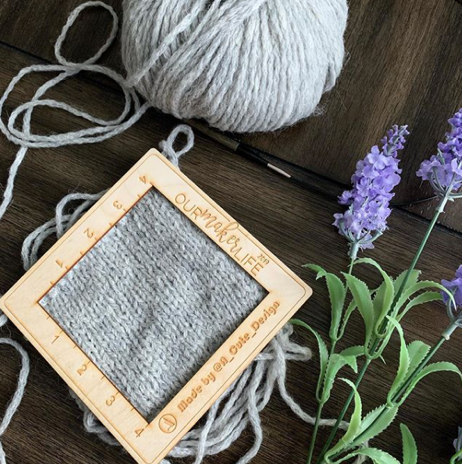
Picture Credit: Angie @snow_city_knits
HOW TO ADD A SIZE THAT ISN’T WRITTEN IN YOUR PATTERN:
Say you wanted to add another size to a pattern that wasn’t there before, you would do so in increments of the number of stitches in the gauge swatch. Example; If a pattern cast on 60 sts for the medium and the gauge was 12 sts per 4” in width, the large would cast on an additional 12 sts, making it 72 because garments jump by 4 inches per size. The next size after would cast on 84, then 96, and so on and so forth. Always adding another “gauge swatch” to add more fabric in width. Note that some patterns have repeats that are worked over a certain amount of stitches (like lacework and colour work, or certain stitches) and may not work out perfectly for the math, so you may have to fudge it as best as you can! That being said, try to get to the number closest to that original gauge swatch increment, while keeping these points in mind.
WHERE ELSE CAN I USE THIS MATH?
Using this gauge swatch can also help in other sections of your pattern. From shaping, to changing sizes if your bottom heavy or top heavy (aka starting out one size and shifting to another to adjust for your measurements), the gauge swatch is your best friend. Need to take out an inch here? Using our previous gauge swatch above: Decrease by 4 stitches (12 divided by 4 = 4 sts per inch) in the next couple rows. Need to add an inch? Increase by 4 stitches. Need to add some length to your item? Work off of your row gauge to have an idea of how much you want to add or take out in your row count.
Examples of ways to manipulate per your body shape:
COKE BOTTLE
If you have a coke bottle shape, you may want to base your size off of your bust and add shaping. Decreases and increases in the waist will maximize that curved illusion. Usually this will take place in the 2-3 inches above and 2-3 inches below the smallest section of your waist. That 4-6” length will also help you determine how many rows you have to decrease to get to your waist, and then increase to get back to the original pattern stitch count, to create shaping.
PEAR SHAPED
If you’re a pear shape, you may want to add more stitches at the initial cast on of a bottom up sweater and decrease as you go to your waist and vice versa for a top down knit. You could even knit the size that measures your hips, and then decrease to the smaller size gradually for your chest. I always suggest going slow, and increasing or decreasing over more rows instead of all at once, which can accidentally create a large jut in the shape of the fabric.
RECTANGLE SHAPE
If you have a rectangle shape, you may want to eliminate waist shaping altogether on tighter knits to ensure your stitches don’t stretch out too much on your torso. You could also create the illusion of curves by making a larger size and adding waist shaping around your natural waist. Giving the look of curves which are not there originally.
T-SHAPED
If you’re T-shaped, you may want to cast on a different size for the bottom than the top and gradually transition your way to the amount of stitches the pattern suggests. You could even change sizes between the bust and hips. Once again, I like the method of going slow and doing more increases/decreases over more rows, than quick and fast where you decrease/increase every row - meaning you get a drastic change really quickly, which creates a “jut” in your work.
CONCLUSION
There are many ways to be able to modify a pattern, but you can only do so when you know what shape your body is (find that out in part 1 here). Though it will take trial and error, be ok with ripping out your work if you don’t like the alterations you made, or they didn’t work. It’s going to take time and practice to understand your body and learn what works best, but the more times you try it, the better you’ll get at making a garment that fits perfectly! What is your favourite way to manipulate a pattern to fit your body shape?
Come back next week to find out: Tips + techniques to modify a pattern!
DIDN’T READ PART ONE? CLICK HERE