
PART THREE: TIPS AND TRICKS FOR THE PERFECT FIT
DIDN’T READ PART ONE? CLICK HERE. DIDN’T CATCH PART TWO? CLICK HERE.
PART THREE: 5 TECHNIQUES TO MANIPULATE A PATTERN
Now we get to the real meat and bread of our three part series! Chances are as a knitter, you may not know all of the tips and tricks out there that you can use to make a pattern fit better on your body. That’s why I’m here to help. Though I don’t know everything, these are a few things I’ve learnt along the way. Since this topic of size inclusivity has been mainly based around designing for plus size bodies - I figured I would add more tips there, even though these tricks are universal for all sizes.
In this blog post we are going to go over: Short rows, bust darts, adjusting for length, shaping and shoulder shaping.
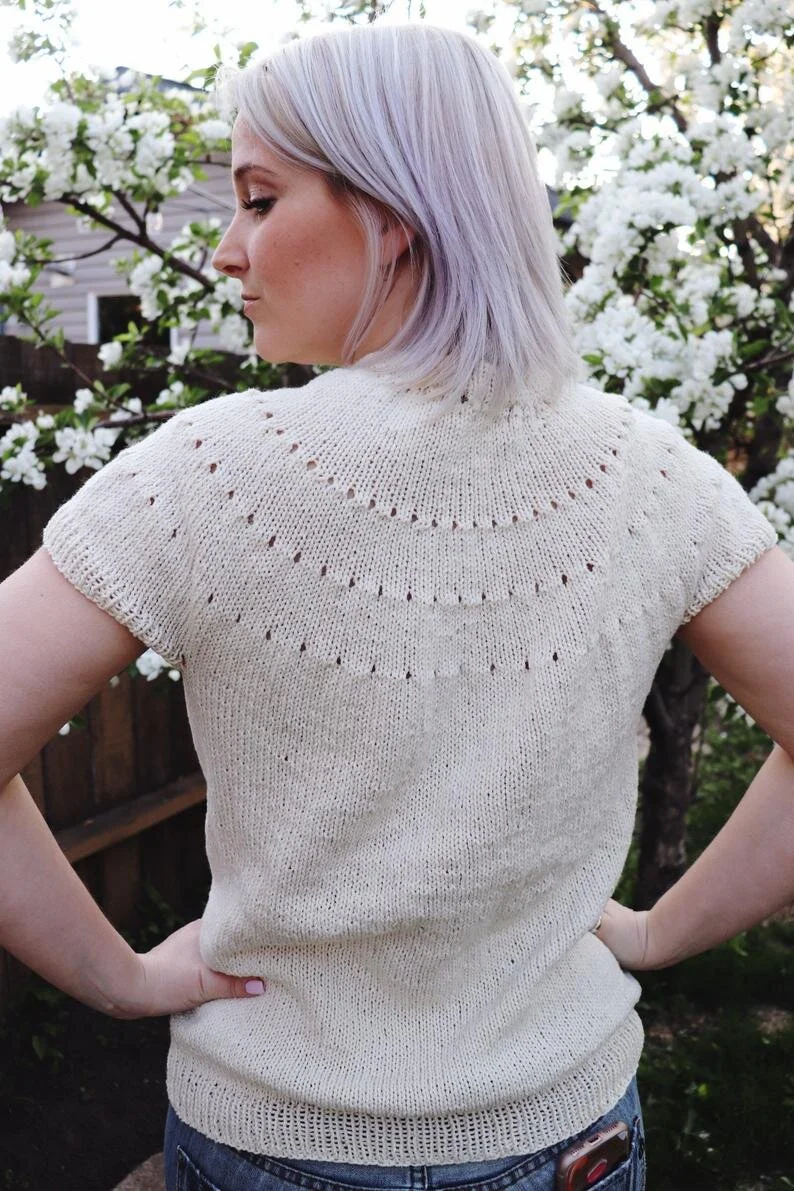
Pattern: Easy Eyelet LITE (notice that the space in between the first two eyelet rows is much larger?
SHORT ROWS:
Ever felt like the collar of a sweater was riding up and choking you, or your boobs literally tipped your sweater up to reveal your tum? Short rows are your answer. Short rows are a great way of lengthening the back of a sweater, while tilting the collar down so it lands closer to your collar bone instead of right up next to your neck. These are great for larger busts as well, since tilting the collar lengthens the front of the work - which can rise up with having to drape over busts that extend farther from the body, meaning the hem will lay evenly. Even though it seems counter-intuitive that adding only rows to the back would change the front, these short rows lengthen both front and back of your knit. It’s a win win. Short rows are best placed within 1-2 inches of the collar on the back, or above the armpit split on the back. They should always take place dead centre in the middle of your back. From personal experience I like when they work across the full back, and to at least the shoulders, if not over them.
How are they done? Short rows are made by doing a series of rows back and forth that don’t go to the end of the row. (Example, you knit to 3/4 across the back on your right shoulder, turn, and work the 3/4 of the stitches you just worked for the right shoulder, past the middle of your back, and then until 3/4 of the way across your left shoulder, and turn. Repeat this going either farther/shorter past the point you last turned.
My favourite: The German short row. (Below)
BUST DARTS:
Bust darts are a great way to help out larger bust ladies who find that they need more space for their bosom in patterns. It’s essentially where you curve and contour the fabric to fit better and let the ladies have more room to breath. Much like a heel turn in a sock, bust darts are a great way of adding fabric and creating curves that weren’t there before. Chances are, if you’re more than an A or B cup, you may need bust darts!
Bust darts come in multiple forms. The most common is horizontal, or “short row” bust darts. Short row bust darts help contour the pieces shape, while also increasing the length of the piece in the front. Worked exactly like the short rows above, these should be done at the apex of the bust to ensure the hem lies evenly.
The second type are vertical bust darts. This is where you increase and decrease the amount of stitches underneath and above your bust so that it expands the width of fabric that covers the tatas. (Imagine the shape of an oval or marquise.) Though more annoying because they change the stitch count in your pattern - I personally think they are less visible, and actually do the trick of covering a larger bust better.
LENGTH:
Since we are all not the same height, length is a great way to modify patterns to fit your body better. Whether you have a shorter torso, longer legs, longer arms etc, adding and subtracting rows in a pattern can ensure you get the custom fit for your body. I always suggest trying things on as you go, so you can do a temperature check. Only you will be able to tell if a garments lands where you want it to. Note: don’t forget to think about stretch and gravity taking effect with wear and what materials you’ve chosen.
SHAPING:
Shaping is the skill of increasing and decreasing stitches to make a section tighter or wider to follow the curvature of your body. Using your gauge swatch, see how many inches you want to take in or out - that’s the amount of stitches you will need to decrease or increase. Then measure how much length/rows you have to do these decreases and increases over - this will also take your gauge swatch’s help! Refer back to part two for a more in depth reminder.
When shaping, I suggest adding or taking out stitches on either side of the garment, following the curve of your waist OR in four points: one under the left bust, one under the right bust, and 2 in mirrored locations on the back.
SHOULDER SHAPING:
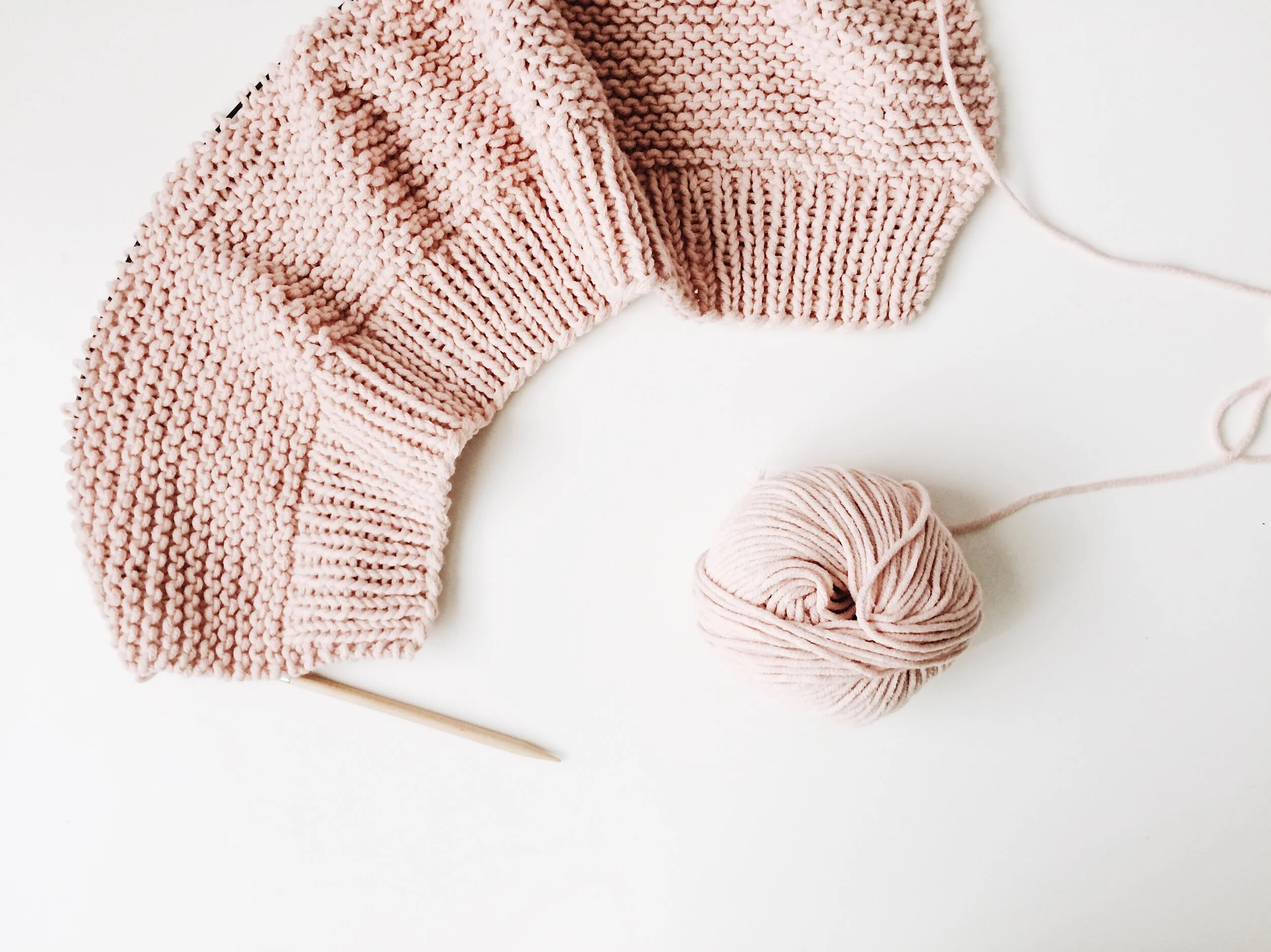
Having too much fabric on the side of your armpit can not only be uncomfortable, but it can draw attention to places you do not want. One of the biggest drawbacks to a drop shoulder sweater is the fact that in larger sizes there can be an over indulgent amount of fabric that stays in the armpit area due to the stitches needed to cover the bust measurement. Most designs bind off under the arms, but you can go a step further by decreasing the stitches closer to the arms, curving them in towards the neckline and eliminating extra fabric that looks bulky and adds weight.
There you have it, 5 quick tips and tricks on how you can modify a pattern to fit your body better. Am I missing any? Let me know in the comments below!
Missed part one? Click here.
Missed part two? Click here.