
YARN SUBBING HERE WE COME!
OK, so you’ve picked up a pattern, now comes the fun part: picking your yarn. That being said with so many different weights, fibers and colors, it can be a bit overwhelming, but hopefully by the end of this, you’ll feel more confident with making your yarn substitutions. We are gonna break down yarn weights, get into the (K)nitty gritty of different fibers and their pros and cons, and other things to consider as you’re making your yarn selection.
FIRST, STEP INTO THE DESIGNERS SHOES
First things first, when you’re on your yarn subbing journey, it’s good to step into the designers shoes for a hot second before starting to pick yarn. Designers will choose different fibers based off of a range of reasons, like drape, structural integrity, fiber content, season, and overall aesthetic. It can really range as each of these things can really effect how a piece turns out. However as much as you want to see what the designer envisioned, you have to do what’s best for you too!
WHEN EVERYTHING ALIGNS
Let’s say you check out the yarn the patterns calls for and tada! It’s in stock near you, it’s the fiber content you like, and it’s in your budget - heck yes! Now all you have to do is order it up and you’re off to the races…. but if it’s not in your region, it’s discontinued, you hate the color choices, your allergic to the fiber content, it’s not in your price range, or you just wanna shop your stash - you get to do the fun thing of substituting the yarn - fondly known as yarn subbing. This is where I come in to help!
BREAKING DOWN THE WEIGHT CLASSES
In the yarn world there are 7 different types of yarn weight classes, and each one is broken down into sub categories. The main thing to know is: look for the yarn thickness category that the pattern calls for. You’ll usually see this in a few forms that range in anything from a number from 1-7, a name, wraps per inch (WPI) or ply (which is kinda outdated, but some countries still use this). Ball bands are super helpful in this section. Grab a nearby skein or ball of yarn and take a look at the printed label. When subbing for a yarn, we want to get them as close as possible.
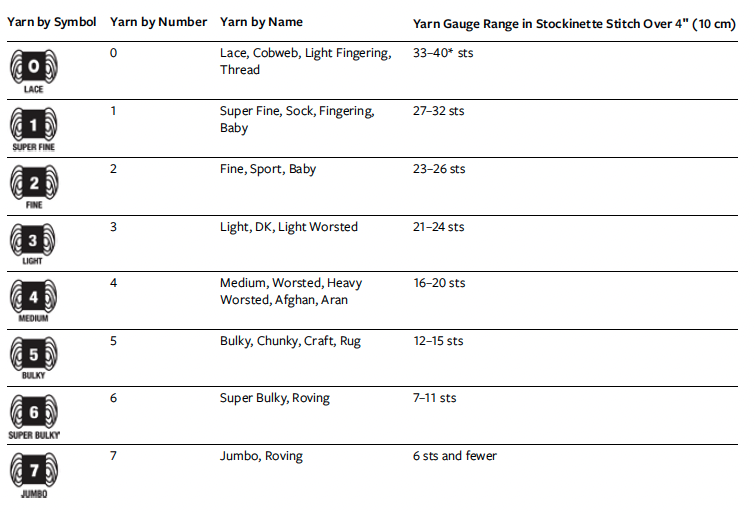
BREAKING DOWN THE WEIGHT CLASSES
As the table above notes, there are 7 different categories of yarn thickness and each one also has multiple names. That’s because yarn weights have sub categories. I like to think of it as jean shopping. Just because I pick a size 10 in multiple places like Old Navy, The Gap, Aritzia and Levis - they aren’t going to all fit the same. The same thing happens with yarn. So as you’re checking, make sure you compare the specs of the yarn that’s called for in the pattern vs the one you’re looking at using. They both could say that they are a size 4, but one might say “aran weight” - which is on the thicker side of a worsted weight - while the other one says “light worsted”, meaning it’s on the lighter end of the size 4 category. The can make or break the way your pattern drapes, fits or how easy it’ll be to get gauge.
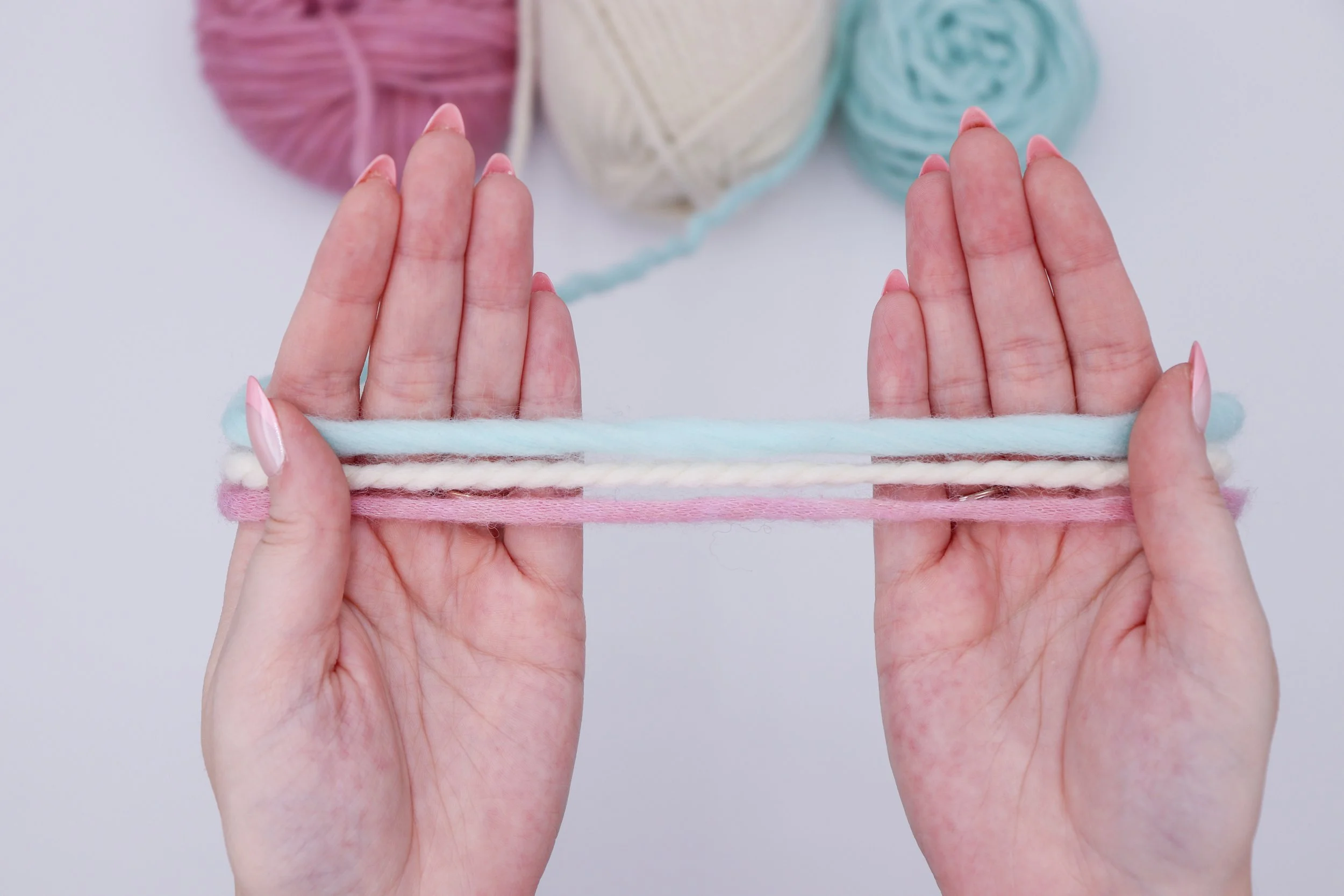
All of the yarns in this photo are a size 6 super bulky. But see that range of thickness?
How do you determine if they are close? We do some math! When looking at the ball band, you’ll want to see how many yards vs grams are there.
Example: let’s say that the yarn that’s called for in the pattern is a size #4 worsted yarn. It’s 165 yards per 100 grams. You now look at the yarn you’re debating on using and see that is 155 yards for 100 grams. That means it’s only a 10 yard difference over 100 grams, so they are pretty close! This should sub well. A good rule of thumbs is to stay within a plus or minus 20% range of the original yardage. Now let’s say you have another ball of yarn, but that one is 125 yards per 100 grams. That’s a 40 yard difference. It might not work as well as the one you were just looking at. When in doubt, a gauge swatch will be the best way to determine if it’s going to sub well.
CAN I SUB A TOTALLY DIFFERENT YARN WEIGHT
As a designer I highly suggest NOT doing this. Subbing a different yarn weight (like a size 3 for a size 4) is 99.9% of the time going to result in you not being able to attain gauge. If you don’t hit gauge, your piece is not going to turn out to be the same measurements as intended or fit (especially for a garment). This would require you to essentially redo the entire stitch counts in the whole pattern to get the right fit/measurements you want. I would suggest keeping that yarn in your stash for a future project. (Note that most designers, including myself will not assist with pattern support like adjusting the stitch count in a pattern simply because you want to use a different yarn weight.)
FIBER CONTENTS
Ooooh, this is where we get really into the fun and nerdy part about fibers, and where we get to see how freaking cool sheep are. So just like designers will choose different yarn weights for a plethora of reasons, the reason why they choose a yarn fiber can also vary. Different fibers can really change the structure, drape and seasonability of a make, so let’s deep dive into this right now.
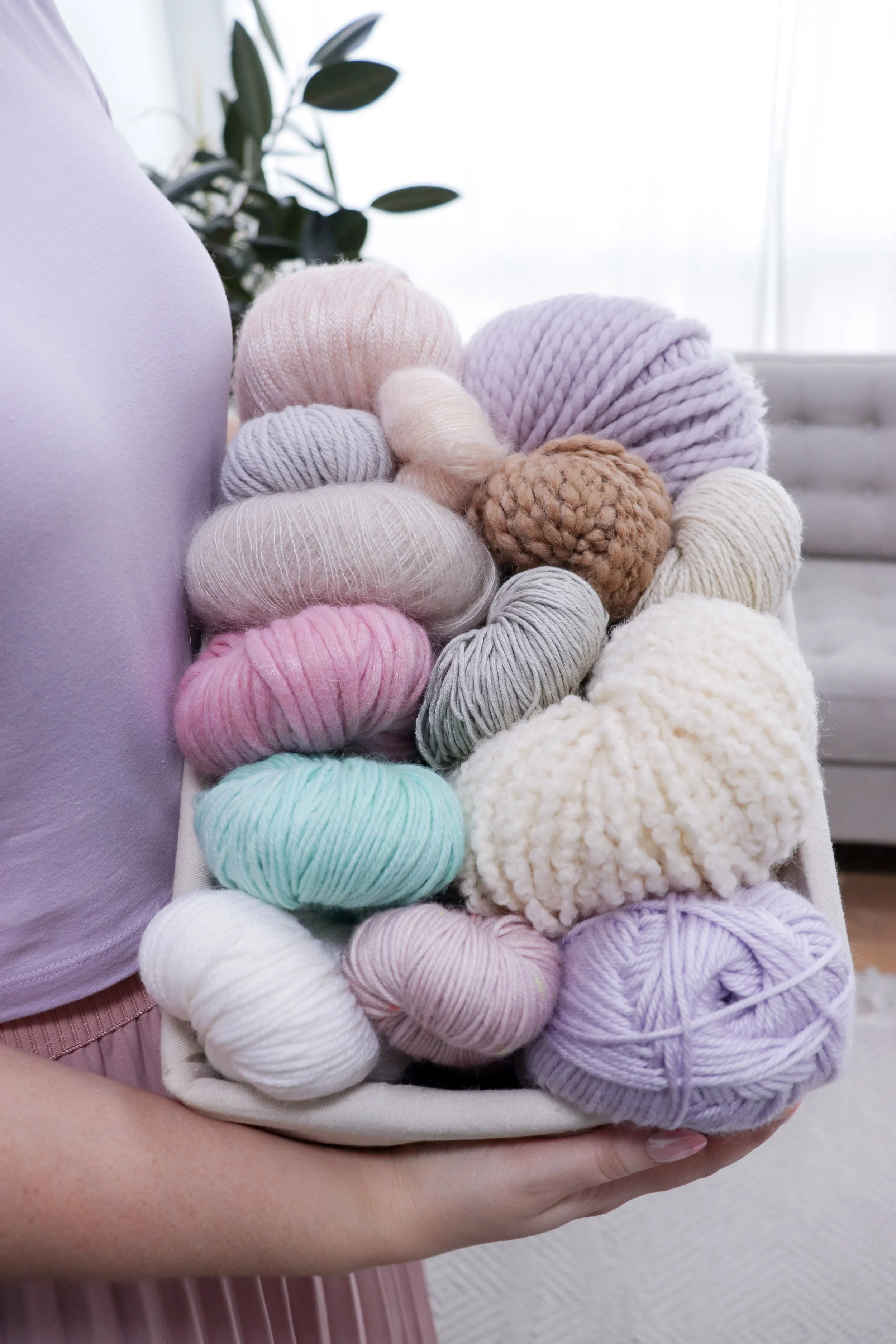
WOOL
The main thing to know about wool? It really knows how to hold its shape. That’s all thanks to the length and crimp of its fibers, which naturally interlock to keep your stitches snug and secure. This quality makes wool a great fit for designs like raglans and circular yokes. Since those styles don’t have shoulder seams and in doing so have less structure, wool steps in to support each stitch—like a well-organized team holding the line against gravity.
Wool is also famous for its warmth, which is why it shows up so often in cool-weather knits. But don’t rule it out for warmer climates just yet. Wool has moisture-wicking powers that help regulate heat (not quite on par with cotton, but still impressive).
And let’s not forget the aesthetics. Some designers choose wool simply for the look. When blended with mohair (from goats) or suri (a type of alpaca), wool can take on an airy, luminous quality that gives sweaters a soft halo effect. While, in regions like Iceland, rustic wool is often the go-to for crafting tightly spun sweaters that hold up beautifully for more of an outer layer/coat type vibe.
SHEEPS WOOL VS CAMELID (ALPACA AND LLAMA)
Okay, while alpaca and llama technically fall under the wool umbrella, they come with their own quirks—so let’s give them their moment. First up: llama. It’s a bit of a tough customer. Coarser and more rugged, llama yarn is usually better suited for things like rugs. Translation: maybe don’t reach for it when planning your next cozy pullover.
Alpaca, on the other hand, is a whole different story. Unlike sheep’s wool—which has bouncy air pockets and lots of crimp to help it spring back into shape—alpaca fibers are longer, smoother, and completely hollow. That means they’re ultra-lightweight, making alpaca a smart pick for garments that are lightweight, and flowy.
One heads-up though: that same lovely drape comes with a tendency to stretch, so you’ll want to keep that in mind during blocking. But it’s worth it—the drape you get from alpaca is hard to beat.
And if you’ve got sensitive skin or an allergy to sheep’s wool, alpaca’s a winner there too. It’s naturally lanolin-free, which means it’s hypoallergenic and gentle on the skin—no itch, no fuss.
SUPERWASH WOOL
Superwash wool is a handy option if you love the cozy warmth of wool but aren’t exactly thrilled about hand-washing your knits every time they need a refresh. It’s been specially treated so you can toss it in the washing machine without worry—no delicate dance with cold water and wool wash required.
But here’s the trade-off: in the superwash process, the little scales on the wool fibers are either smoothed down or coated, which means they can’t lock together like untreated wool. That makes the yarn softer (and less itchy—great news for babies, kids, or anyone with sensitive skin), but it also means you lose some of that signature wool structure.
One quirk to watch for? Superwash wool has a bit of a dramatic streak when it gets wet—it tends to stretch out. Thankfully, a quick spin through the dryer helps it spring back into shape. So yes, it’s lower-maintenance, but it still comes with its own set of care instructions.
ACRYLIC
Acrylic yarn is a synthetic fiber—yep, manmade—that’s known for being strong, durable, and lightweight. It holds its shape nicely and can take a bit of a beating, which makes it perfect for knits that need to stand up to everyday wear and tear. Since it’s made from polyacrylonitrile (basically plastic), it’s super easy to care for, totally hypoallergenic, and a great option for folks who can’t wear wool.
Price-wise, acrylic tends to be wallet-friendly while still offering warmth and the all-important ability to survive the washing machine. That makes it a go-to for baby items, kids’ clothes, and gifts for those family members who are absolutely going to toss your lovingly hand-knit sweater into the dryer—no matter how many times you warn them not to.
Now, acrylics do catch some flak for not being as eco-conscious as natural fibers, and that’s fair. But they still have a solid place in the crafting world, especially when durability, affordability, and machine-washability are top priorities.
PLANT-BASED FIBERS
Hello, hot-weather knits! Plant-based fibers like bamboo, cotton, and linen are summertime staples—and for good reason. They’re breathable, lightweight, and great at wicking away moisture, making them perfect for keeping cool when the temperatures climb.
These fibers tend to be long and smooth, without the crimp you’ll find in wool. That means they don’t have much memory, so they won’t bounce back into shape quite the same way. But what they lack in structure, they more than make up for in drape. These yarns flow beautifully, which makes them ideal for relaxed tops, breezy cardigans, and other garments that don’t need to hold in heat—or hold a rigid shape.
Now, while you might want to skip them for something long and structured (gravity will win that fight), they shine in more laid-back, fluid designs.
OVERALL
With so many fibers out there—from sheep’s wool to angora, cashmere, alpaca, acrylic, and plant-based blends—there’s no shortage of options. Each has its own personality and strengths, and your choice will depend on the look, feel, and function you’re going for. Trust the designer’s recommendation, but don’t be afraid to make your own call. Your sweater, your rules.
OTHER THINGS TO KEEP IN MIND
So, you’ve found a yarn you think might work. Before you click “purchase”, let’s chat about a few other factors that can make or break a successful yarn swap.
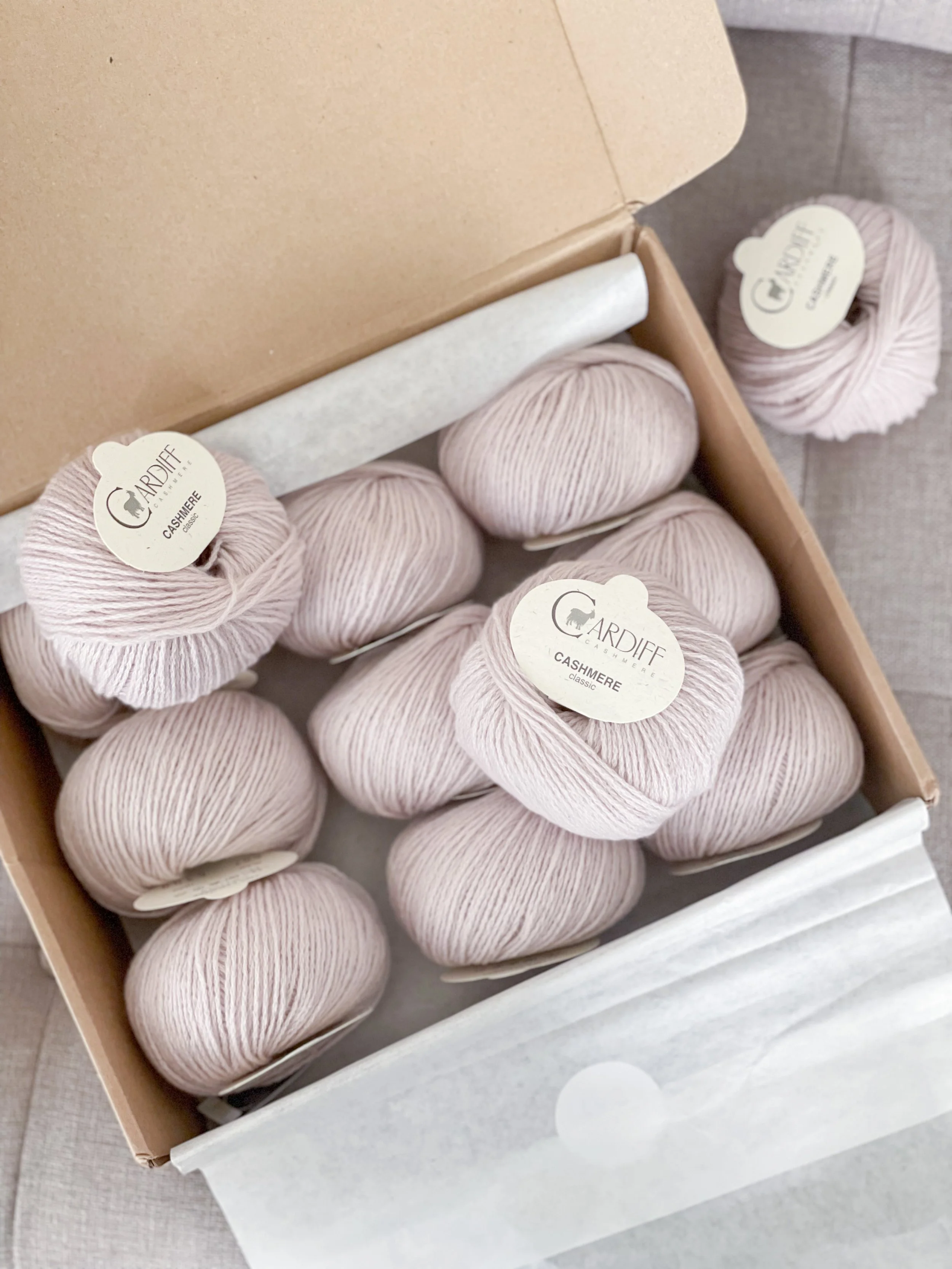
Price Point - Sweaters are yarn-hungry—especially in larger sizes—so cost matters. Some yarns, like cashmere, land squarely in the splurge category. If you’re newer to sweater knitting, you might want to save the fancy stuff for later, once you’re more confident and less likely to cry over frogging $200 of fluff.
The Touch Test - Not all yarns are skin-friendly for everyone. What feels buttery-soft to one person might feel like a cactus to someone else. To test a yarn’s “next-to-skin” friendliness, rub a strand along your cheek, neck, or collarbone—your most sensitive spots. If you get the itchies (or a full-body shudder), consider swapping it out for something gentler.
Environmental Impact - If sustainability is on your radar, here’s a quick cheat sheet:
Wool is natural, biodegradable, and renewable.
Acrylic is plastic-based and can release microplastics into water systems when washed.
Plant-based fibers (like cotton and bamboo) are biodegradable but can require a lot of water to produce.
No need to be perfect—just stay mindful and pick what aligns with your values.
Density - Some yarns are sneakily heavy. For instance, cotton may weigh more than the same yardage of wool or alpaca. Even if the label says 200 yards, cotton might drag your sweater down in ways you didn’t expect. Keep this in mind for garments with a lot of length or where drape matters.
Texture - Yarn texture can totally change how your finished sweater looks. Bouclé, mohair, faux fur, thick-thin blends, roving, woolen spun, worsted spun… each brings its own vibe. Some will blur out stitch definition, while others make cables or lace stitches pop. If you want your stitchwork to shine, keep texture in mind.
Dye Lots - When yarns are dyed, they’re done in batches called “dye lots.” Even if two skeins are labeled the same color, different dye lots can have subtle shade shifts. Larger brands usually have bigger, more consistent batches, while indie dyers may vary more. Best practice? Buy enough from the same lot to finish your project. (Because color changes halfway through a sweater? Not the look.)
Color - Color choice can either highlight or hide your stitchwork. Solid shades tend to show off texture and lace more clearly. Variegated yarns can be fun, but they may muddle details. And for colorwork, contrast is key—choose colors that clearly stand apart so your design doesn’t get lost in the mix.
YARNSUB.COM - YOUR SECRET SHORTCUT
Okay, after all that yarn talk, here’s a little shortcut for you: Yarnsub.com. It’s a super handy website where you can plug in the yarn the pattern calls for, and it’ll give you a list of solid substitution options based on fiber content, weight, structure, and more.
Now, it’s not perfect—it won’t factor in your budget, what’s available locally, or every single yarn on the market—but it’s a fantastic place to start when you’re feeling a little overwhelmed in the yarn aisle (virtual or otherwise).
SAY NO TO YARN SNOBS
Whether it’s a Facebook group, a craft night, or a comment section, there’s always someone ready to give you side-eye over your yarn choice. Ignore them. Seriously. Substituting yarn isn’t one-size-fits-all—it’s a mix of budget, availability, feel, function, and personal preference. You’re allowed to choose what works best for you.
So go ahead, my yarn-subbing superstar. Be bold. Be practical. Be playful. And remember: if your first choice doesn’t work out, it’s just yarn. You can always frog it and try again with something new.